
MOONGRES · MATERIALS FOR ARCHITECTURE
Stone & Natural Materials — An Architectural Language
Mineral · Variation · Sense of Place
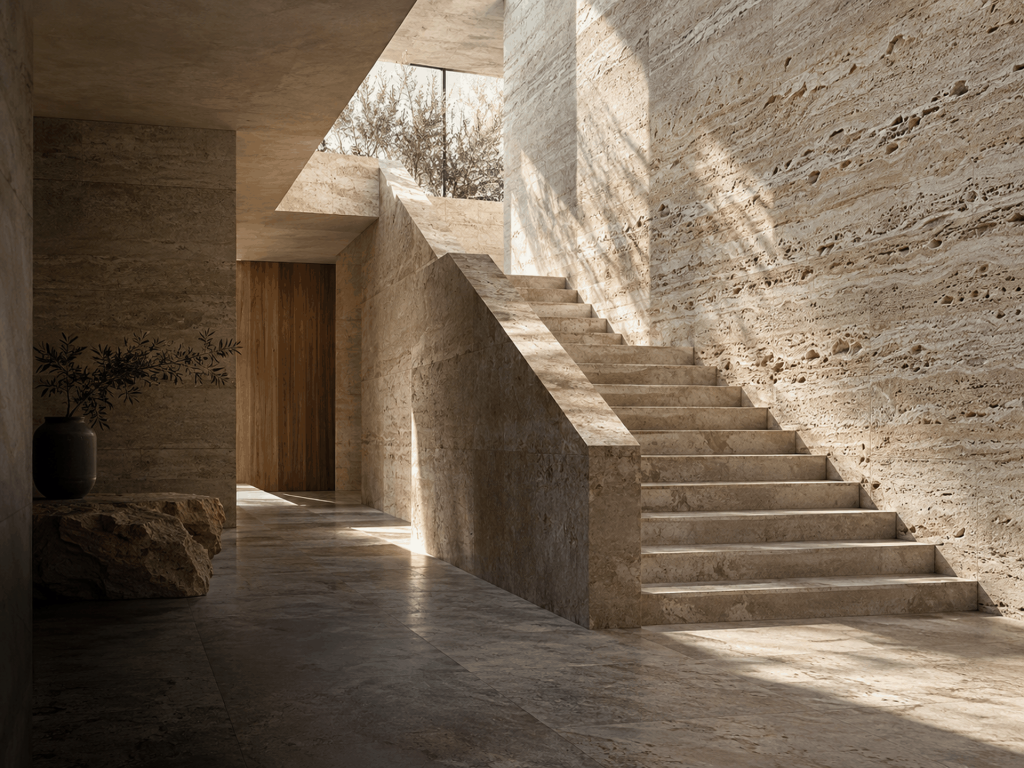
Stone continues to matter in contemporary architecture because of its layers, veins, pores and tonal variation. Its natural character need not create a rustic interior. Proportion, finish and detailing can bring a mineral surface into a precise, restrained composition.
Variation with purpose
Consider whether variation should form a calm field or a stronger focal point. Travertine, limestone, marble and dark stone suggest different rhythms and weights. Review several faces together so the chosen sample does not become a misleading picture of the installed surface.
Build a material dialogue
Timber can introduce organic warmth beside a mineral surface; metal can offer precision and reflection; textiles can soften the composition. Light and shadow change how these relationships are experienced throughout the day.
Distinguish language from material identity
Stone-look porcelain interprets aspects of natural stone without becoming the same material. Select for the intended architectural character, then verify the actual product, finish, format and technical requirements. A natural appearance is not evidence of a particular performance or environmental claim.
English editorial edition. Read the full Vietnamese article →


