
MOONGRES · MATERIALS FOR ARCHITECTURE
Material Trends in Contemporary Interiors
Character · Contrast · Composition
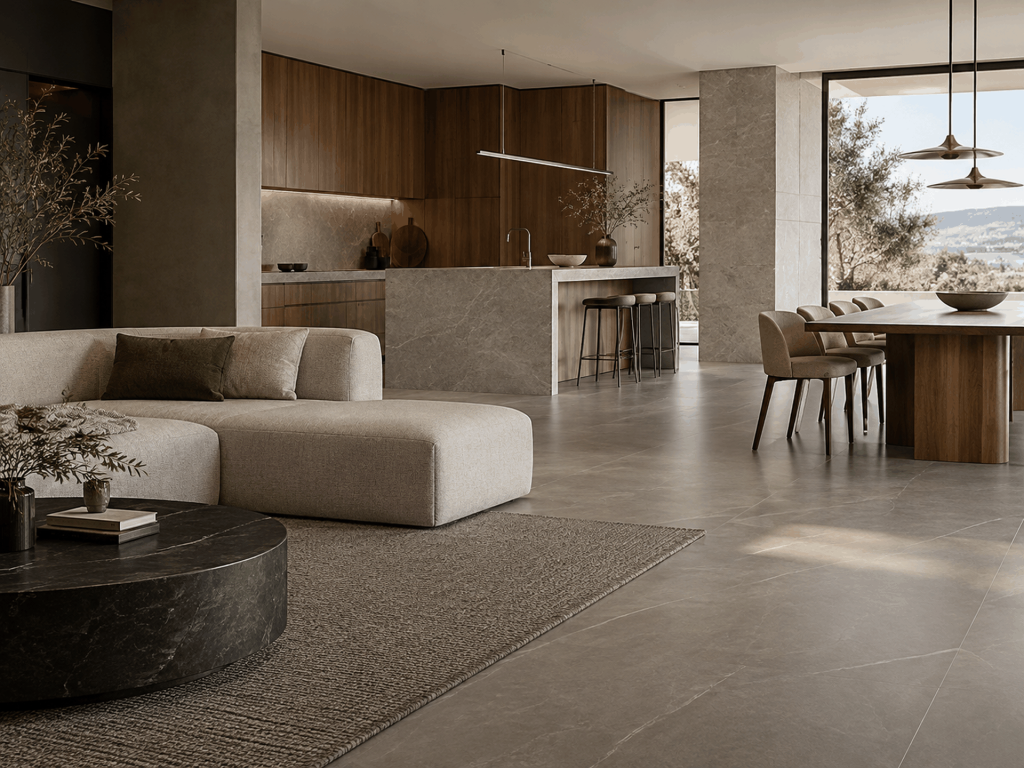
A contemporary interior rarely belongs to a single style. Stone may give a space weight, timber warmth, cement restraint, marble movement and terrazzo rhythm. The useful question is how these qualities work together in a particular room.
Select with intention
A smaller, deliberate palette can offer more clarity than a catalogue of fashionable finishes. Tone-on-tone compositions create differences through shade and texture; contrast can come from reflection, grain, scale or surface depth as well as colour.
Consider the whole surface
Light, format and joint layout affect how a material is read. Move beyond the individual sample to the installed field, adjacent finishes and viewing distance. The same reference may serve a quiet residential setting or a more expressive F&B environment in different ways.
Use trends as a starting point
A trend is a way of looking, not a specification. Translate the design direction into a material hierarchy, then evaluate real samples and product-specific information. Contemporary work can draw on familiar materials without depending on novelty.
English editorial edition. Read the full Vietnamese article →


